01 / 04
The seed
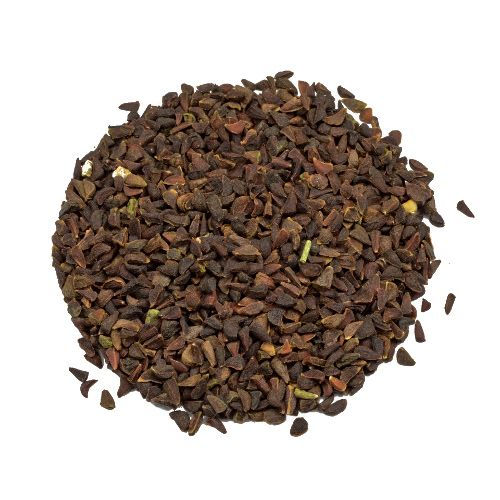
A gram holds roughly 500 seeds: dark brown, angular and about 1.8 mm long (Li et al., 2023). They ripen in leathery capsules, 45 to 60 to a capsule. Sown on the surface in warmth they germinate within two weeks, and they are also the most toxic part of the plant. Read the growing guide.
02 / 04
The plant
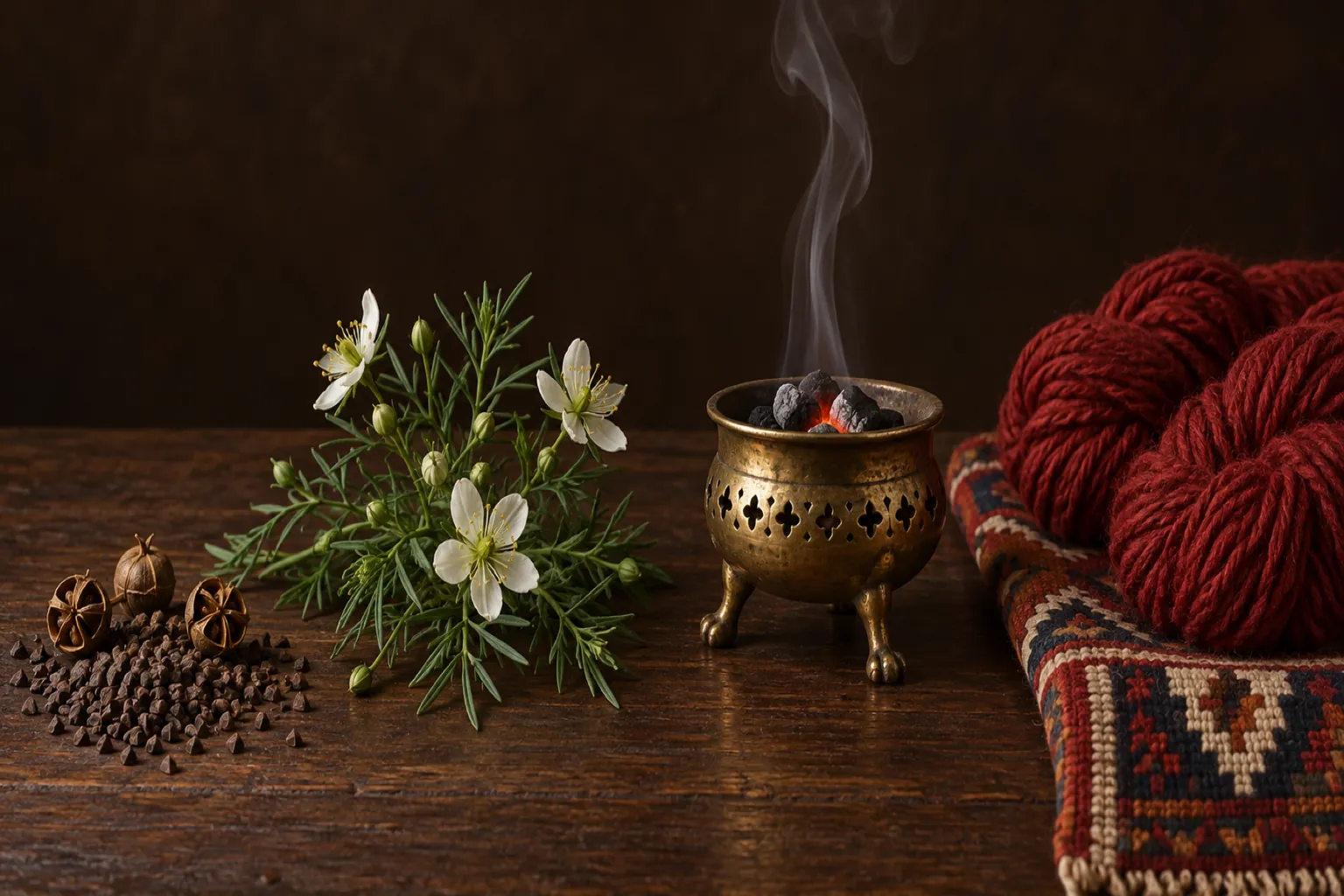
A bushy perennial of 30 to 70 cm with fleshy, finely divided leaves and white five-petalled flowers from spring into early autumn. It grows wild from Morocco and Spain to Central Asia and northern China. In the American West, where it was first recorded in 1920, it is a listed noxious weed. More on the plant and where it grows.
03 / 04
Smoke and dye
Iron Age censers from Qurayyah in northwest Arabia carry harmal residue dated to about 2,700 years ago. In Iran and its neighbours the seeds are still dropped on glowing charcoal as esfand, against the evil eye. Elsewhere they coloured wool; the famous Turkey red came from madder root instead. Read the history of esfand smoke and harmal dye.
04 / 04
Caution
Harmine and harmaline block MAO-A strongly: in one laboratory study, seed extract halved the enzyme's activity at 27 micrograms per litre. Together with antidepressants, several other medicines, stimulants or food rich in tyramine, that can cause serotonin syndrome or a dangerous rise in blood pressure. Poison centres have recorded deaths after people swallowed the seeds. Keep them away from children, pets and anyone on serotonergic medicine, and read risks and documented poisonings.