
Chapter 04 of 06
Syrian rue risks, MAOI interactions and documented poisonings
Which medicines, drugs and foods clash with the MAO inhibitors in Syrian rue, what published poisonings show, and who should keep the seeds out of the house.
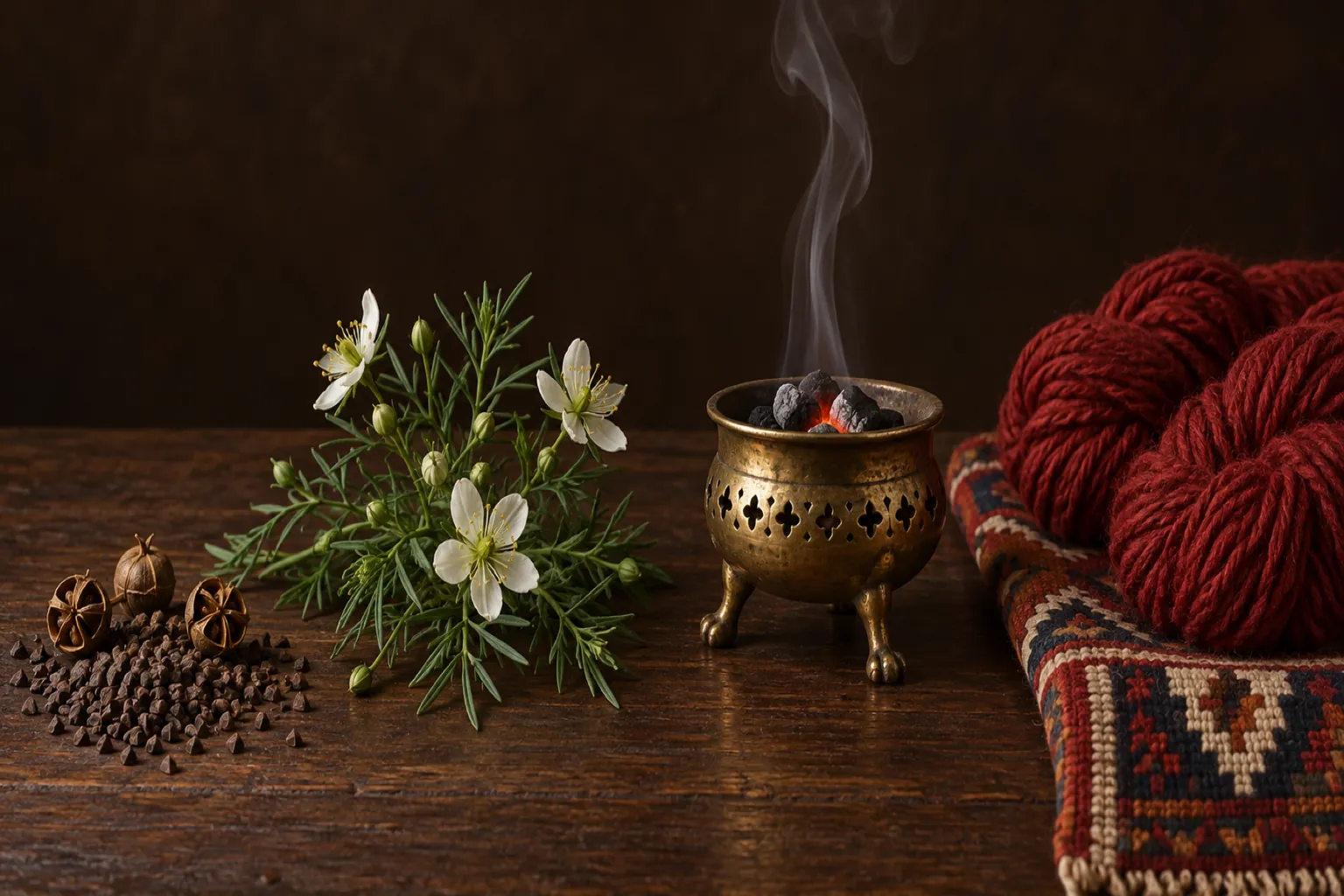
Syrian rue seeds carry two kinds of risk. The harmine and harmaline in them block the enzyme MAO-A, which makes many medicines, drugs and some foods dangerous in combination. And the seeds are poisonous in their own right: case reports from Turkey, Italy and Morocco describe people in intensive care after swallowing them, and a Moroccan series records deaths. This page collects what is documented.
Who should keep the seeds out of reach
- Children and pets. Seeds and fruit are the most toxic parts of the plant. Store bags closed and high up, like any garden chemical.
- Anyone who is pregnant. Several of the most serious published cases involve pregnant women, some of whom took the seeds in an attempt to end a pregnancy.
- Anyone taking antidepressants or other serotonergic medicines. Stay out of esfand smoke as well; how much alkaloid the smoke delivers is unknown.
- Grazing animals. In the United States the plant is a known cause of livestock poisoning.
Interactions: medicines and drugs
With MAO-A blocked, substances that raise serotonin or noradrenaline can build up. The result can be serotonin syndrome or a dangerous rise in blood pressure. MedlinePlus lists these as typical combinations with MAO inhibitors (MedlinePlus: serotonin syndrome):
| Group | Examples | Why it matters |
|---|---|---|
| SSRI antidepressants | citalopram, escitalopram, fluoxetine, paroxetine, sertraline | serotonin syndrome |
| SNRI antidepressants | venlafaxine, duloxetine, desvenlafaxine | serotonin syndrome |
| Other MAO inhibitors | phenelzine, tranylcypromine, selegiline | stacking of MAO inhibition |
| Migraine medicines | triptans such as sumatriptan | serotonin syndrome |
| Opioids and cough medicine | meperidine (pethidine), fentanyl, dextromethorphan | serotonin syndrome |
| Stimulants and party drugs | amphetamines, methamphetamine, cocaine, MDMA (ecstasy) | serotonin syndrome, blood pressure |
| Psychedelics | LSD and tryptamines | serotonin syndrome, severe poisoning |
The list is not complete. MedlinePlus also names supplements that interact with the MAOI medicine phenelzine, such as tryptophan, tyrosine and phenylalanine (MedlinePlus: phenelzine). If you take any prescription medicine, ask a pharmacist before you keep or burn Syrian rue in the house.
One published case shows what a combination can do. In 2004, toxicologists in Massachusetts described a teenager who was severely poisoned after combining harmaline with the tryptamine 5-MeO-DMT, based on information found online (Brush et al., 2004). This site gives no information on combining harmala alkaloids with other substances.
Interactions: food
Tyramine, an amine found in aged, fermented and spoiled food, normally gets broken down by MAO-A in the gut and liver. With the enzyme blocked, it can raise blood pressure. MedlinePlus lists the foods to watch with MAOI medicines: meat, poultry, fish or cheese that has been smoked, aged, improperly stored or spoiled; certain fruits, vegetables and beans; alcoholic drinks; and fermented yeast products.
How large this risk is for Syrian rue is not known. The alkaloids in the seeds inhibit MAO-A reversibly (Herraiz et al., 2010), unlike the old irreversible MAOI drugs, and a 2018 review argues that modern food contains far less tyramine than older warnings assume (Gillman, 2018). Neither point has been tested for the seeds, so they do not make it safe.
Documented poisonings
Syrian rue tea, Turkey
An emergency department in Izmir treated a 41-year-old woman who had boiled about 100 grams of seeds in water following a folk recipe. She arrived unconscious, with high blood pressure, a racing heart and fast breathing; liver and kidney values were grossly raised. She needed a breathing tube and recovered over five days (Yuruktumen et al., 2008).
Seeds bought online, Italy
Forensic toxicologists in Padua described a patient who drank an infusion of seeds bought over the Internet. Harmine, harmaline and related alkaloids were found in the seed extract and in the patient's urine, the first case confirmed by laboratory analysis, according to the authors. The paper lists the typical signs of beta-carboline poisoning: visual and auditory hallucinations, loss of coordination, nausea, vomiting, confusion and agitation (Frison et al., 2008).
Two hundred cases, Morocco
The Moroccan poison control centre reviewed 200 poisonings with Peganum harmala recorded between 1984 and 2008 (Achour et al., 2012):
- 167 of the 200 patients were women; the average age was 24.
- About a third had taken the plant for a complaint of their own, 28.5 percent in a suicide attempt and 13.5 percent in an attempt to end a pregnancy.
- Neurological signs were most common, followed by digestive and cardiovascular ones.
- Where the outcome was known (114 cases), 7 patients died, a fatality rate of 6.2 percent.
Pregnancy, Morocco
Two case reports from Moroccan intensive care units describe young pregnant women poisoned by the seeds. One, 22 weeks pregnant, developed kidney failure and liver damage, needed dialysis and a breathing tube, lost the pregnancy and was left with lasting problems of balance and nerve function (Berdai et al., 2014). The other arrived in shock with kidney failure and bleeding in the brain and left hospital after six weeks (Ghizlane et al., 2021).
Livestock
The Oregon Department of Agriculture puts the lethal amount of seeds and fruit for grazing animals at 0.15 percent of body weight. Young leaves are less toxic; dry leaves appear harmless (ODA profile).
If someone has swallowed seeds
Call your local emergency number straight away (112 in the EU, 999 in the UK, 911 in the US), or in the US the Poison Help line on 1-800-222-1222. Tell them it is Peganum harmala, a plant that contains MAO inhibitors, and list any medicines the person takes. Bring the bag. Do not wait to see whether symptoms develop.
For the chemistry behind these risks, read harmine and harmaline. If you grow the plant, the growing guide covers safe handling in the garden.