
Chapter 05 of 06
Growing Syrian rue from seed, and which bag of seeds to choose
How to sow Peganum harmala: the light and warmth seeds need, soil and winter care in a wet climate, keeping the plant contained, and which seed bag to buy.
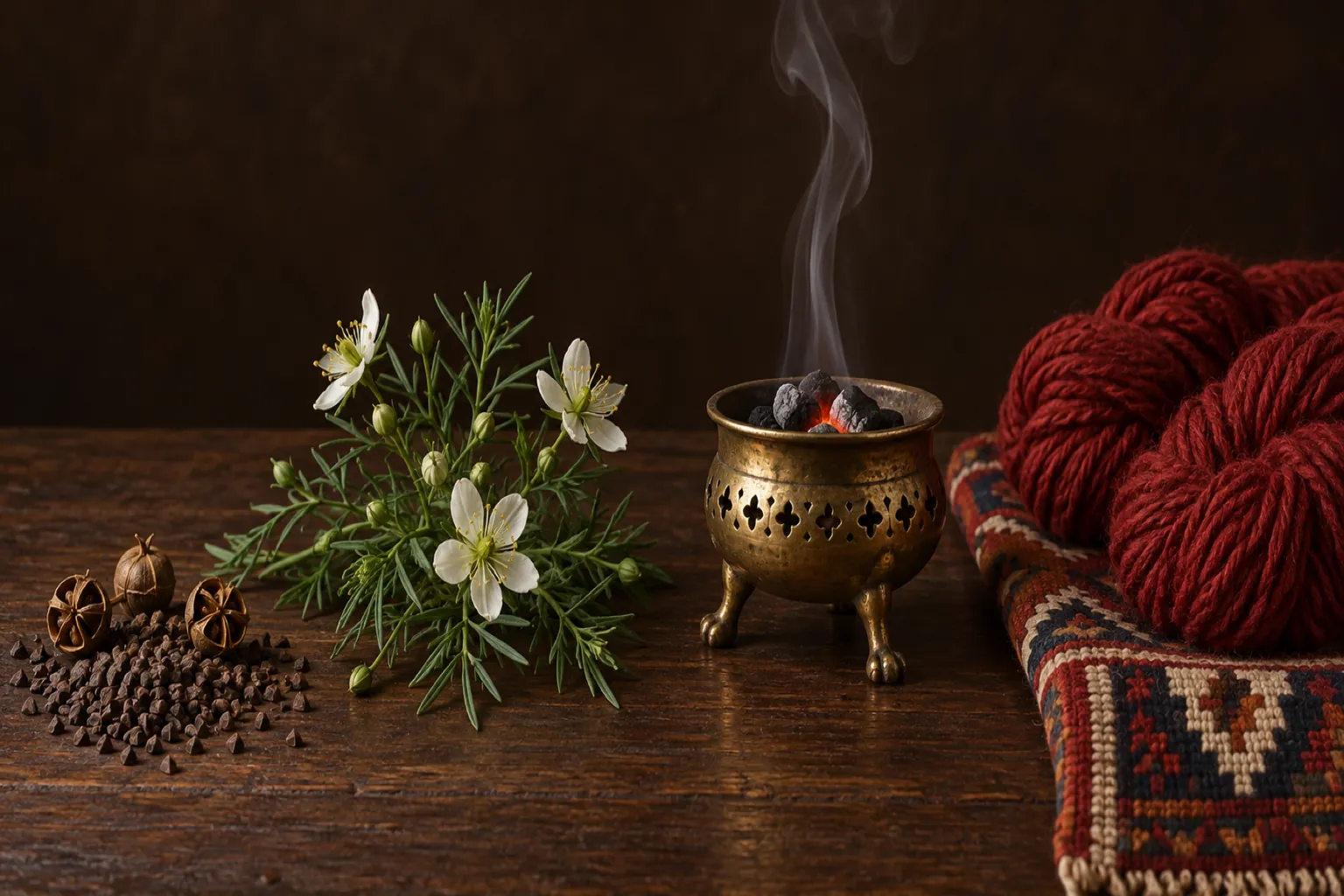
Syrian rue germinates readily if you give it two things: light and warmth. In a 2023 germination study, seeds kept on a 12-hour light and dark cycle reached 94 percent germination at alternating temperatures of 25/10 °C and 30/15 °C, while seeds kept in complete darkness germinated significantly less and a cold regime of 20/5 °C gave only 9 percent (Li et al., 2023). So sow on the surface, and sow late enough in spring.
Sowing, step by step
- Wait for warmth. Sow indoors on a bright windowsill from April, or outdoors once nights stay above about 10 °C, usually late May in the Netherlands, Britain or Germany.
- Use a lean, gritty mix. Half sowing compost, half sharp sand or fine grit works well. The plant comes from dry, often saline ground and does not need rich soil.
- Sow on the surface. Scatter the seeds thinly and press them in lightly. Cover at most with a dusting of sand: they need light to germinate.
- Keep moist, not wet. The seeds take up water fast; in the study their weight doubled within eight hours. A long pre-soak adds little. Mist the surface and cover the pot with clear plastic or glass until shoots appear.
- Expect seedlings within two weeks at the right temperature. The study counted germination over 14 days.
- Pot on early. Syrian rue forms a long taproot. Move seedlings into deep pots once they have two or three true leaves, and plant them out before the root fills the pot.
A gram holds roughly 500 seeds (0.2 grams per 100 in Li's measurement), so even the smallest bag gives you far more than a garden needs. Sow a pinch and keep the rest dry, dark and cool in a closed jar.
Useful for sowing
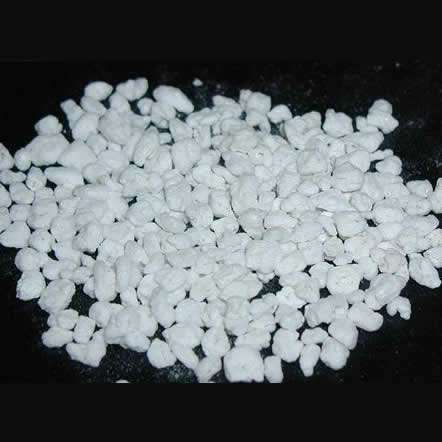
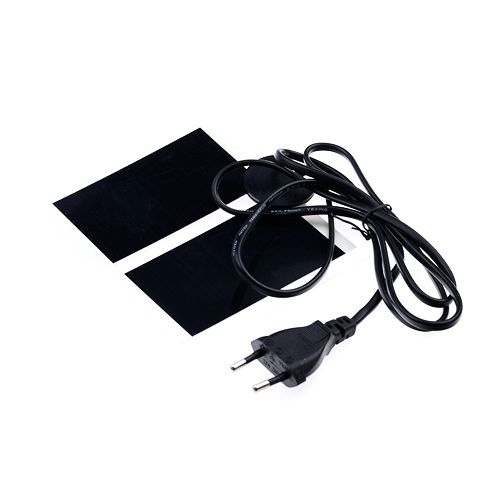
The same shop sells a few growing aids that suit a seed tray. Perlite opens up a sowing mix so it drains freely, and the shop's small heating mat, made for mushroom growboxes, raises the temperature to about 23 °C according to its product description. Germination in the study was best with warm days and cooler nights, so switch a mat off at night rather than running it around the clock. Thin gloves are handy when you clean seed from dry capsules.
 Avalon Magic Plants
Perlite - 1000 cc
€3.95
View product
Avalon Magic Plants
Perlite - 1000 cc
€3.95
View product
 Avalon Magic Plants
Avalon Heating Mat Small - 14x15 cm
€14.95
View product
Avalon Magic Plants
Avalon Heating Mat Small - 14x15 cm
€14.95
View product
 Avalon Magic Plants
Sterile gloves - per pair
€1.75
View product
Avalon Magic Plants
Sterile gloves - per pair
€1.75
View product
Where it grows best
Give it the hottest, driest spot you have: full sun, free-draining soil, no shade from taller plants. A gravel garden, a raised bed with grit, a south-facing wall or a large terracotta pot are all good. Once established it needs little water. The US National Park Service describes it as extremely drought tolerant and able to grow in alkaline and saline soils (NPS).
| Need | What to give it |
|---|---|
| Light | full sun, and light on the seed when sowing |
| Germination temperature | warm days with cooler nights, best around 25 to 30 °C by day |
| Soil | sandy or gritty, free-draining, lime is fine |
| Water | moderate for seedlings, sparing once established |
| Space | about 1 metre per plant when mature |
| Winter | dies back to the rootstock; keep the crown dry |
Getting it through a wet winter
The plant is a perennial that dies back in autumn and sprouts again from its woody rootstock in spring. Its native range reaches Kazakhstan and western Mongolia, where winters are far colder than in western Europe, so frost is unlikely to be the main problem. The likelier threat in a Dutch or British winter is cold, waterlogged soil around a root built for desert ground. Plant it in raised, gritty ground, or grow it in a deep pot that you move under a roof overhang or into an unheated greenhouse from November to March.
Keeping it contained
Outside its native range Syrian rue can become invasive. In the western United States it is a listed noxious weed, and in Oregon it may not be sold or propagated at all (see the law page). In a European garden the risk is small, but the habit is a good one:
- Cut off seed capsules before they dry and split, unless you want the seed.
- Do not put seed heads on the compost heap.
- Never sow it outside your own garden.
- Wear gloves when you harvest seed, wash your hands afterwards, and keep harvested seed away from children and animals. Seeds are the most toxic part of the plant (see risks).
Which bag to choose
Avalon Magic Plants sells Peganum harmala seeds in five sizes, all the same product. The shop describes them as authentic seeds of good quality, "strictly intended for horticultural use", and sells to adults only. Choose by what you plan to do:
| Bag | Roughly | Good for |
|---|---|---|
| 25 g | 12,500 seeds | a few garden plants, with plenty left to try esfand |
| 100 g | 50,000 seeds | regular esfand burning through the year |
| 250 g | 125,000 seeds | first dye experiments on small skeins of wool |
| 500 g | 250,000 seeds | dyeing larger amounts of wool |
| 1000 g | 500,000 seeds | dye projects or shared use in a workshop or group |
Seed counts are estimates from the published seed weight; real seed varies with harvest and origin. Prices are shown on the card and in the shop.
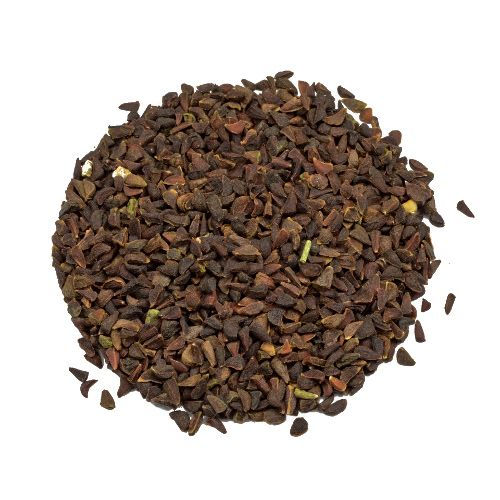
Choose a bag at Avalon Magic Plants
Avalon ships from the Netherlands, where the seeds are legal to buy, own and grow. If you live elsewhere, check the law page first: in France the plant itself is a controlled narcotic, and several US states ban it as a noxious weed.
Want to know what you are growing? Read about the plant and its history as smoke and dye.